BREEDING FROM OUR HERD
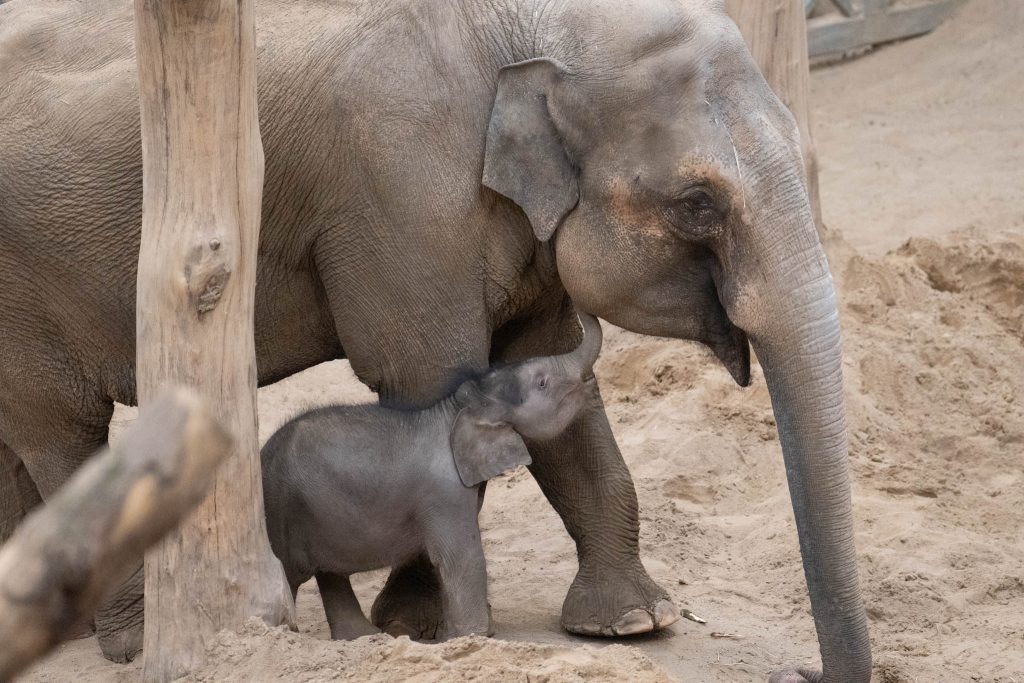
History was made on the 2nd September 2025, when Tara gave birth to a healthy female calf.
After years of strategic planning, preparations had been made in order to carefully manage and mitigate challenges that may arise during pregnancy, birth and the postnatal care surrounding such a rare event.
This knowledge, along with the close positive relationships the team has with the herd, meant that when the calf was born and had difficulty suckling, our keepers took the difficult but life-saving decision to provide nutritional support in the most effective way possible.
They provided vital support for the first-time mum, expressing milk from her to ensure the calf received the necessary colostrum that is essential to provide antibodies, that are rich in nutrition to help to protect newborns.
Since the birth, our dedicated keepers have provided 24-hour monitoring and support and are continuing to do so. Every three hours, keepers open a specially designed port leading to a secure calf area, adjacent to the herd. When she’s ready, she makes her way through to receive a bottle of specialised elephant milk. After she’s had her fill, she returns to the herd in her own time. This approach allows the team to safely provide the nutritional support needed with minimal impact on the herd’s behaviour and development. Throughout the process, Mum Tara and other females remain in close proximity, enabling them to keep an eye on the calf or physically reassure her if needed, which maintains the crucial bond and protective instincts, that are key elements in any elephant family.
The indoor house was originally closed for privacy, allowing the herd to bond. It has since reopened at certain times during the day for visitors to see the new arrival.
The keeping team named the calf Zaiya (pronounced similar to higher), which is of Burmese origin and means strength. Zaiya is doing well – she is gaining weight and displaying a whole host of natural behaviours. She is inquisitive, playful and learning everything she needs to know about life as an elephant from her mum and “allomothers” or aunts.